Noida
08048068829
+919220902176
about-cover-bg image
About Asees Derma Clinic

Where Science Meets Beautiful Skin

Services
Featured Services

What We Cure

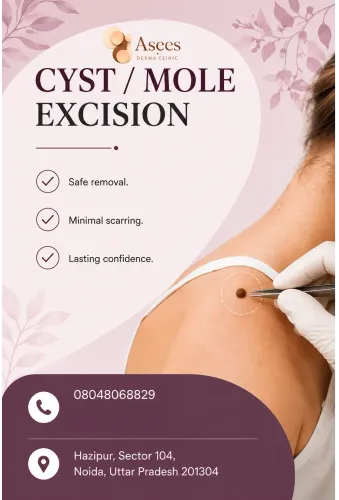
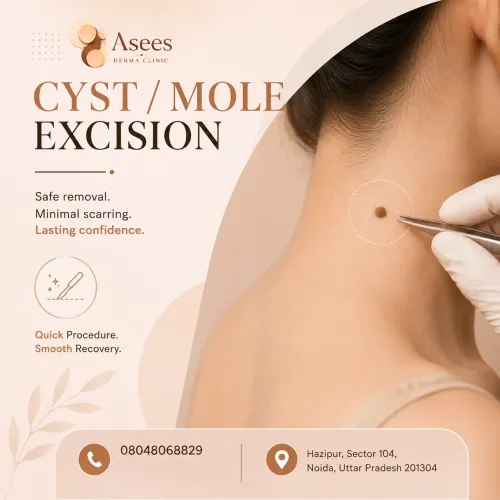
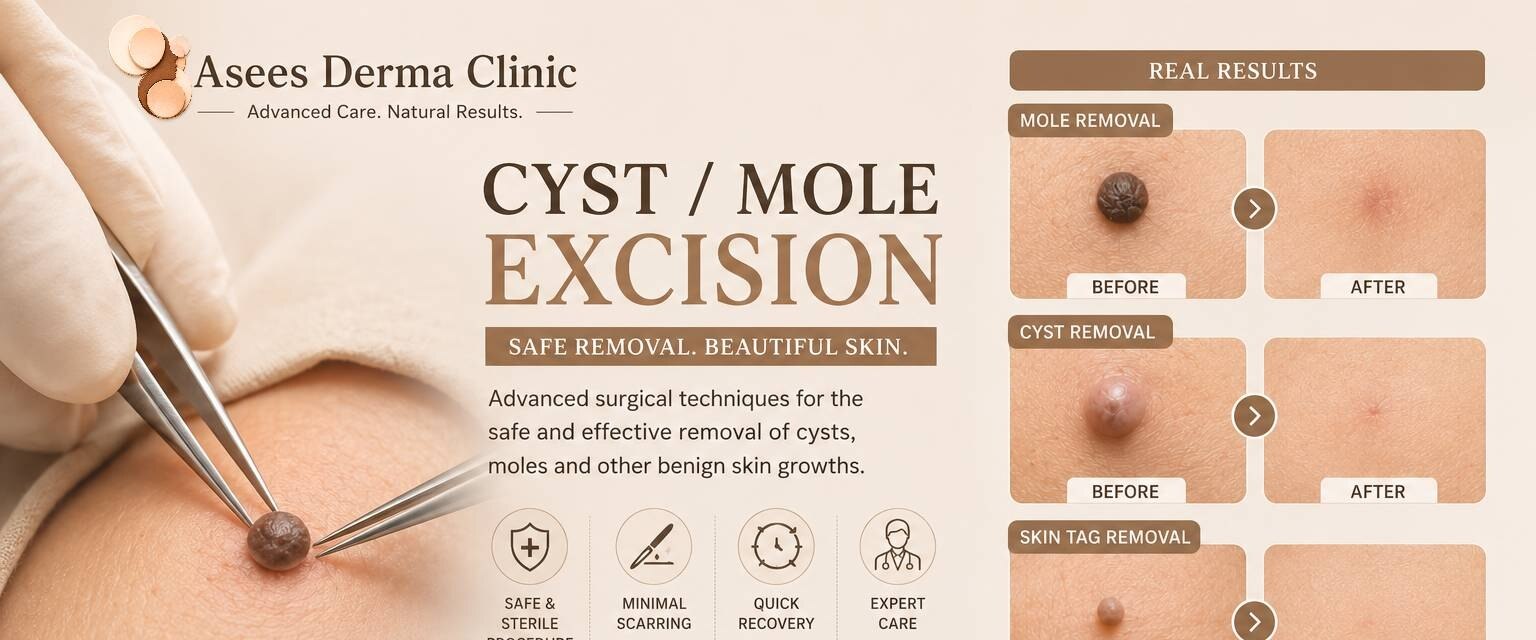
Cyst/ Mole Excision

At Asees Derma Clinic, we provide Cyst and Mole Excision, a safe, precise, and minimally invasive surgical procedure performed by an experienced dermatologist to remove unwanted skin cysts, benign moles, and other non-cancerous skin growths. Whether the lesion is causing discomfort, recurring infections, irritation, cosmetic concerns, or has changed in appearance, our goal is to provide effective treatment while preserving the health and appearance of your skin. Every procedure is carefully planned after a detailed clinical examination. We focus on complete removal whenever appropriate, minimal scarring, and a comfortable patient experience using modern surgical techniques and evidence-based dermatological care. What is Cyst/Mole Excision? Cyst/Mole Excision is a minor dermatological surgical procedure in which a cyst or mole is carefully removed under local anesthesia. Unlike treatments that only reduce the size of a lesion, excision aims to remove the entire growth. For cysts, this often includes removing the cyst wall to reduce the chance of recurrence. For moles, the entire lesion may be removed when clinically appropriate. The procedure is performed in a sterile clinical setting and usually takes a short amount of time, allowing most patients to return home the same day. What is a Skin Cyst? A skin cyst is a closed sac beneath the skin that contains fluid, keratin, or other material. Most cysts are benign (non-cancerous) and grow slowly over time. Common types include: Epidermoid Cysts Sebaceous Cysts Pilar (Trichilemmal) Cysts Inclusion Cysts Although many cysts are harmless, they can sometimes: Increase in size Become painful Get infected Discharge foul-smelling material Cause cosmetic concerns Recur repeatedly In such cases, surgical excision may be recommended. What is a Mole? A mole (also called a nevus) is a common skin growth formed by clusters of pigment-producing cells. Most moles are harmless and remain unchanged throughout life. However, some moles may become cosmetically bothersome, frequently irritated by clothing or shaving, or develop changes in size, shape, or color that require medical evaluation. Your dermatologist will assess the mole carefully before recommending removal. Why Might Cyst or Mole Removal Be Needed? Removal may be recommended for several reasons, including: Medical Reasons Recurrent infection Pain or tenderness Rapid increase in size Repeated inflammation Persistent discharge Bleeding Suspicious changes in appearance Interference with daily activities Cosmetic Reasons Visible facial lesions Neck lesions Scalp cysts Large or raised moles Skin growths affecting appearance Patient preference after clinical evaluation Conditions We Treat Our dermatology team commonly performs excision for: Epidermoid Cysts Sebaceous Cysts Pilar Cysts Benign Moles Intradermal Nevi Congenital Benign Nevi (selected cases) Lipomas (selected cases) Benign Skin Growths Recurrent Cysts Inflamed Cysts (when appropriate) Every lesion is evaluated individually to determine the most suitable treatment approach. Benefits of Cyst/Mole Excision When clinically indicated, surgical excision offers several advantages: Complete removal of the lesion Reduces the chance of recurrence for many cysts Relieves pain and discomfort Improves cosmetic appearance Prevents repeated infections Helps eliminate irritation from clothing or shaving Allows tissue to be sent for laboratory examination (biopsy) if required Performed under local anesthesia Safe outpatient procedure Minimal downtime for most patients

Aesthetics

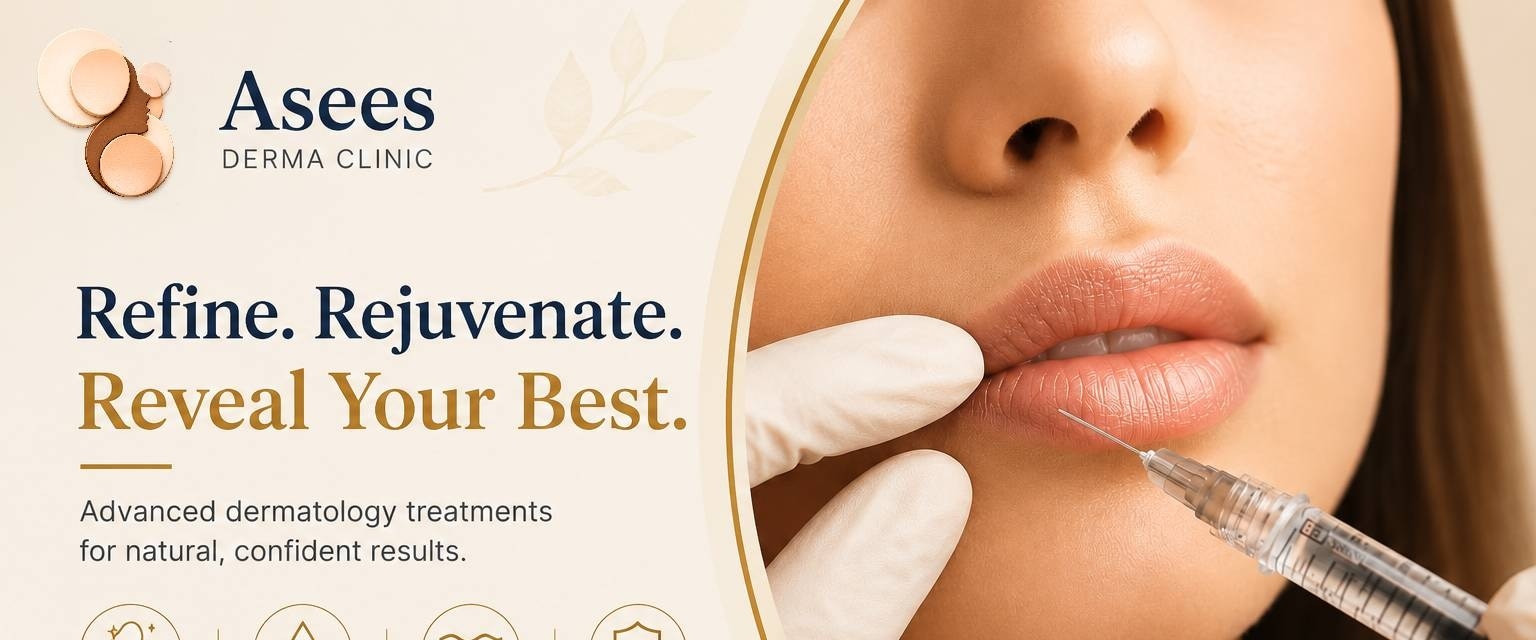
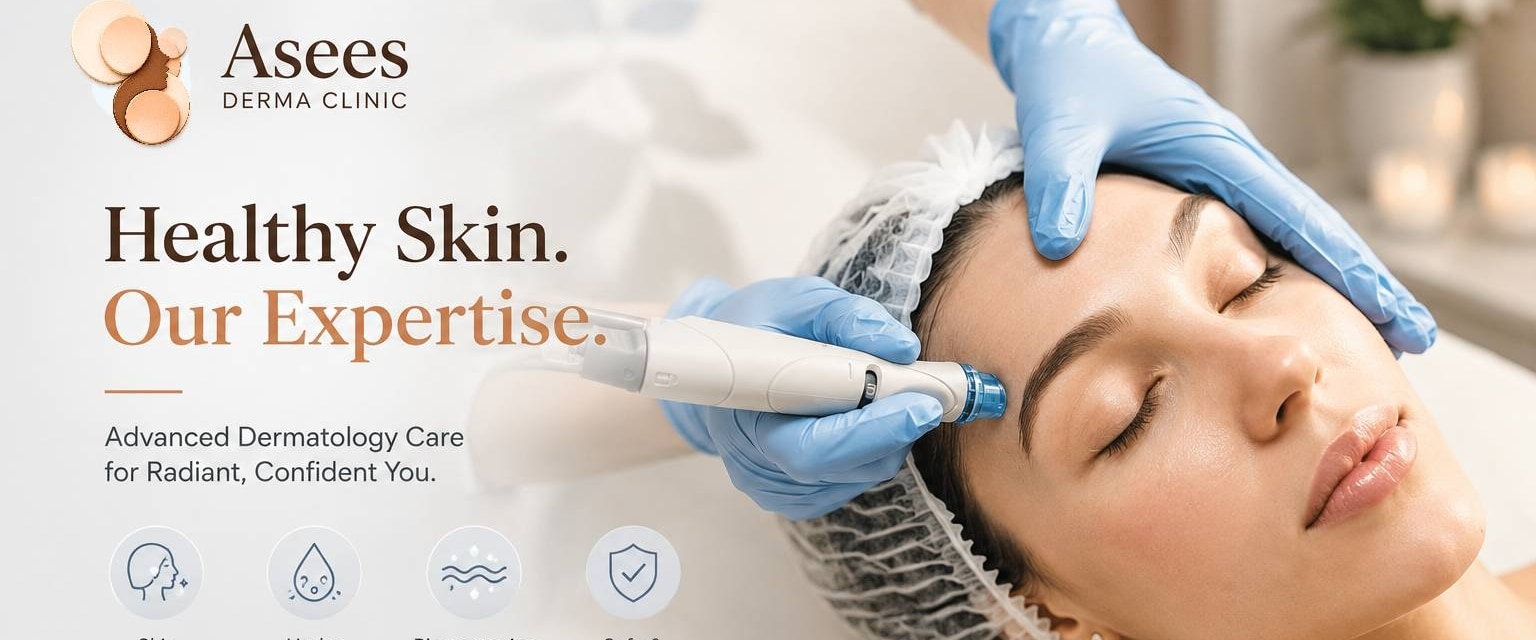
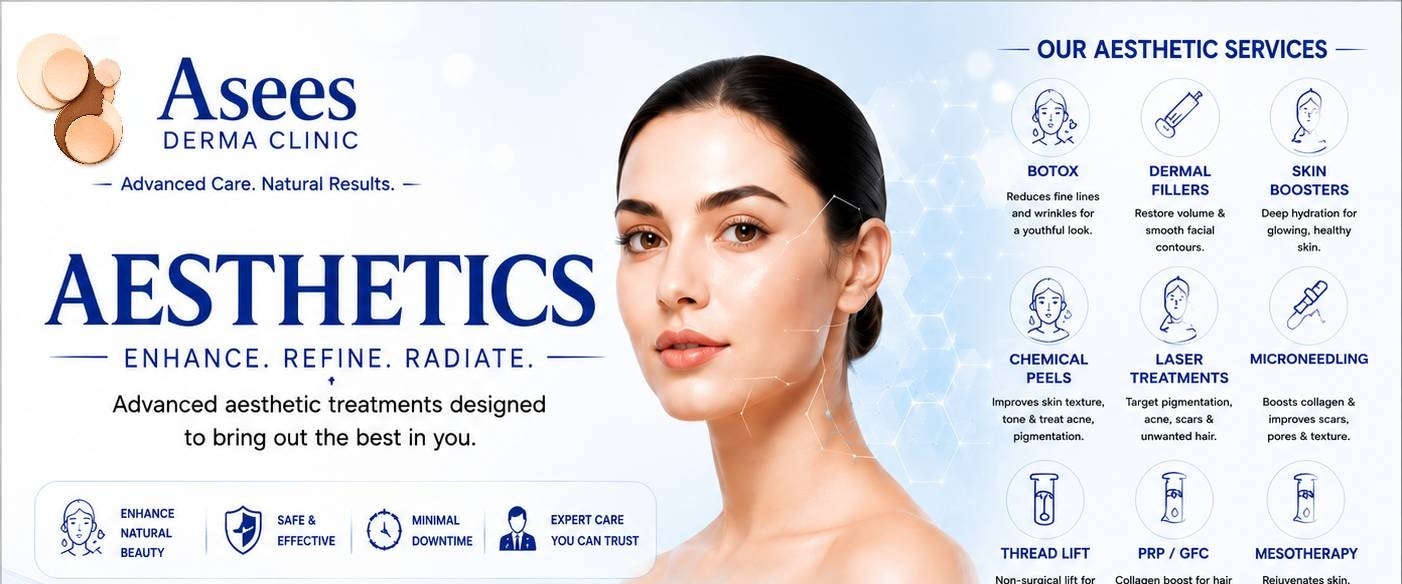
Aesthetics Treatments at Asees Derma Clinic Personalized Aesthetic Care for Naturally Beautiful Results At Asees Derma Clinic, we believe that aesthetic treatments should enhance your natural beauty—not change who you are. Our aesthetic dermatology services are designed to improve skin quality, restore youthful features, and help you look refreshed while maintaining a natural appearance. Whether your concern is dull skin, acne scars, pigmentation, fine lines, wrinkles, volume loss, uneven skin texture, or early signs of aging, our treatments are personalized to suit your skin type, facial features, and aesthetic goals. Using advanced dermatology techniques and evidence-based treatment protocols, we focus on achieving healthy, balanced, and long-lasting results with patient safety as our highest priority. What is Aesthetic Dermatology? Aesthetic dermatology is a specialized branch of dermatology that focuses on improving the appearance and overall health of the skin, hair, and facial features through non-surgical and minimally invasive treatments. Unlike cosmetic products that provide temporary improvements, professional aesthetic treatments work beneath the surface of the skin to improve texture, stimulate collagen production, restore hydration, and address specific concerns. The goal is simple: Healthier Skin. Natural Beauty. Greater Confidence. Our Aesthetic Philosophy Every face is unique, and so is every treatment plan. At Asees Derma Clinic, we do not believe in a "one-size-fits-all" approach. Every patient undergoes a detailed consultation and skin assessment before treatment begins. This allows us to understand your concerns, evaluate your skin condition, and recommend treatments that are both safe and suitable for your needs. Rather than creating an artificial appearance, our focus is on subtle, balanced enhancements that complement your natural features. Our Aesthetic Services:- We offer a comprehensive range of advanced aesthetic dermatology treatments, including: Botox- Botox is used to soften dynamic facial lines caused by repeated muscle movement, such as forehead lines, frown lines, and crow's feet. It helps create a smoother, refreshed appearance while preserving natural facial expressions. Dermal Fillers- Dermal fillers restore lost facial volume, enhance facial contours, and soften deeper lines and folds. They may also be used to enhance lips, cheeks, chin, and jawline after careful assessment. Chemical Peels- Medical-grade chemical peels exfoliate damaged skin, improve acne, reduce pigmentation, brighten dull skin, and promote smoother texture. Microneedling- Microneedling stimulates the skin's natural healing process and collagen production, making it effective for acne scars, enlarged pores, fine lines, and uneven texture. PRP & GFC Therapy- Platelet-Rich Plasma (PRP) and Growth Factor Concentrate (GFC) therapies use your body's own growth factors to support hair restoration, improve skin quality, and encourage natural regeneration. Exosome Therapy- Exosome therapy is an advanced regenerative treatment that promotes cellular repair, supports collagen production, improves skin texture, and encourages healthier hair growth. Laser Treatments- Laser technologies are used for concerns such as pigmentation, acne scars, unwanted hair, skin rejuvenation, and overall skin improvement, depending on individual suitability. Skin Boosters- Skin boosters deeply hydrate the skin, improve elasticity, and restore a healthy, radiant glow. Mesotherapy- Mesotherapy delivers carefully selected nutrients and active ingredients into the skin to improve hydration, rejuvenation, and overall skin quality. Thread Lift- A non-surgical procedure that provides a subtle lifting effect and stimulates collagen production for firmer-looking skin. Conditions We Treat Our aesthetic treatments can help improve: Fine Lines & Wrinkles Acne & Acne Scars Pigmentation Melasma Sun Damage Dull Skin Uneven Skin Tone Enlarged Pores Loose Skin Loss of Facial Volume Hair Fall Early Signs of Aging Skin Dehydration Uneven Skin Texture Unwanted Facial Hair Dark Circles (selected cases) Benefits of Aesthetic Treatments Our treatments are designed to deliver natural-looking improvements while supporting long-term skin health. Benefits include: Brighter, healthier-looking skin Improved skin texture Better hydration Reduction in fine lines and wrinkles Improved collagen production Enhanced skin firmness More even skin tone Reduction in pigmentation Improved acne scars Better facial balance Healthier hair growth Increased self-confidence Minimal downtime for many procedures
Vitiligo Surgeries

At Asees Derma Clinic, we provide advanced Vitiligo Surgery for patients with stable vitiligo who have not achieved satisfactory improvement with medications or phototherapy alone. Our goal is to restore natural skin pigmentation using scientifically proven surgical techniques that offer long-lasting and natural-looking results. Vitiligo surgery is a specialized dermatological procedure performed only after a detailed clinical evaluation. If your vitiligo has remained stable for a suitable period and you meet the eligibility criteria, surgical treatment can significantly improve the appearance of depigmented patches and help restore confidence. What is Vitiligo? Vitiligo is a chronic skin condition in which the cells responsible for producing skin pigment (melanocytes) are lost or stop functioning. This leads to the development of white patches on different parts of the body. Vitiligo is:- Not contagious Not caused by poor hygiene Not a skin infection Not life-threatening Although vitiligo does not usually affect physical health, it can have a significant emotional and psychological impact, especially when it affects visible areas such as the face, hands, lips, or neck. What is Vitiligo Surgery? Vitiligo surgery is a procedure in which healthy pigment-producing cells (melanocytes) or healthy skin are transferred from a normally pigmented area of the body to stable vitiligo patches. The objective is to repopulate the white patches with functioning melanocytes so that natural skin color gradually returns. Unlike creams or medications, surgery aims to physically restore pigment cells in areas where they are no longer functioning. Who is a Good Candidate for Vitiligo Surgery? Vitiligo surgery is not suitable for everyone. It is generally considered for patients who have: :-Stable vitiligo (no new patches or enlargement of existing patches for an appropriate duration, as determined by the dermatologist) :-Poor response to medical treatment :-Well-defined white patches :-Good general health :-Realistic expectations regarding treatment outcomes A thorough evaluation is essential before deciding whether surgery is appropriate. Who May Not Be Suitable? Vitiligo surgery may not be recommended for: Actively spreading vitiligo Patients with a tendency to develop abnormal scars (such as keloids) Active skin infections at the treatment site Certain medical conditions that may affect healing Your dermatologist will assess your medical history and skin condition before recommending surgery. Surgical Techniques Available Depending on the size, location, and characteristics of the vitiligo patches, different surgical techniques may be considered. Suction Blister Epidermal Grafting (SBEG) Small blisters are created on healthy pigmented skin. The thin layer of skin containing melanocytes is carefully transferred to the depigmented area. This technique is commonly used for smaller, stable patches. Split Thickness Skin Grafting (STSG) A very thin layer of healthy skin is taken from a donor site and transplanted onto the vitiligo patch. This method may be suitable for larger stable lesions. Punch Grafting Tiny circular grafts of healthy skin are transferred into prepared areas of vitiligo. It is often useful for selected stable patches. Non-Cultured Melanocyte–Keratinocyte Cell Suspension (NC-MKCS) Healthy pigment cells are separated from a small sample of normal skin and applied to the depigmented area. This advanced technique can treat relatively larger areas using a small donor sample. The choice of procedure depends on individual assessment and will be discussed during consultation. How Does Vitiligo Surgery Work? The surgery involves transferring healthy pigment-producing cells from unaffected skin to the white patches. After the procedure: The transplanted melanocytes settle into the treated area. The cells gradually begin producing melanin. Pigment slowly returns over several weeks to months. Repigmentation is gradual and varies between individuals. Conditions Treated. Vitiligo surgery may be considered for stable vitiligo affecting: Face Lips Neck Hands Arms Legs Feet Trunk Cosmetic areas requiring pigment restoration Benefits of Vitiligo Surgery Vitiligo surgery offers several potential benefits for suitable candidates: Restores natural skin color Improves cosmetic appearance Long-lasting pigmentation Natural-looking results Improves self-confidence Targets stable patches that have not responded to medication Uses your own healthy pigment cells Personalized treatment approach

Doctor's Profile Picture

Aditi Wadhwa

Aditi Wadhwa

MBBS, MD Dermatology
Noida

Speciality

Dermatologist


Education

MBBS, MD Dermatology


Experience

6 years


Mobile

9811744176


Memberships

Indian association of dermatology, venereology and leprosy, Association Of Cutaneous Surgeons (India), International Dermoscopy Society


Registration No

78624

Image Gallery

Pictures That Speak

Need Trusted Second Opinion?

Not sure about your diagnosis or treatment plan? We're here to help.

Testimonials View All
testimonial image
Reviews

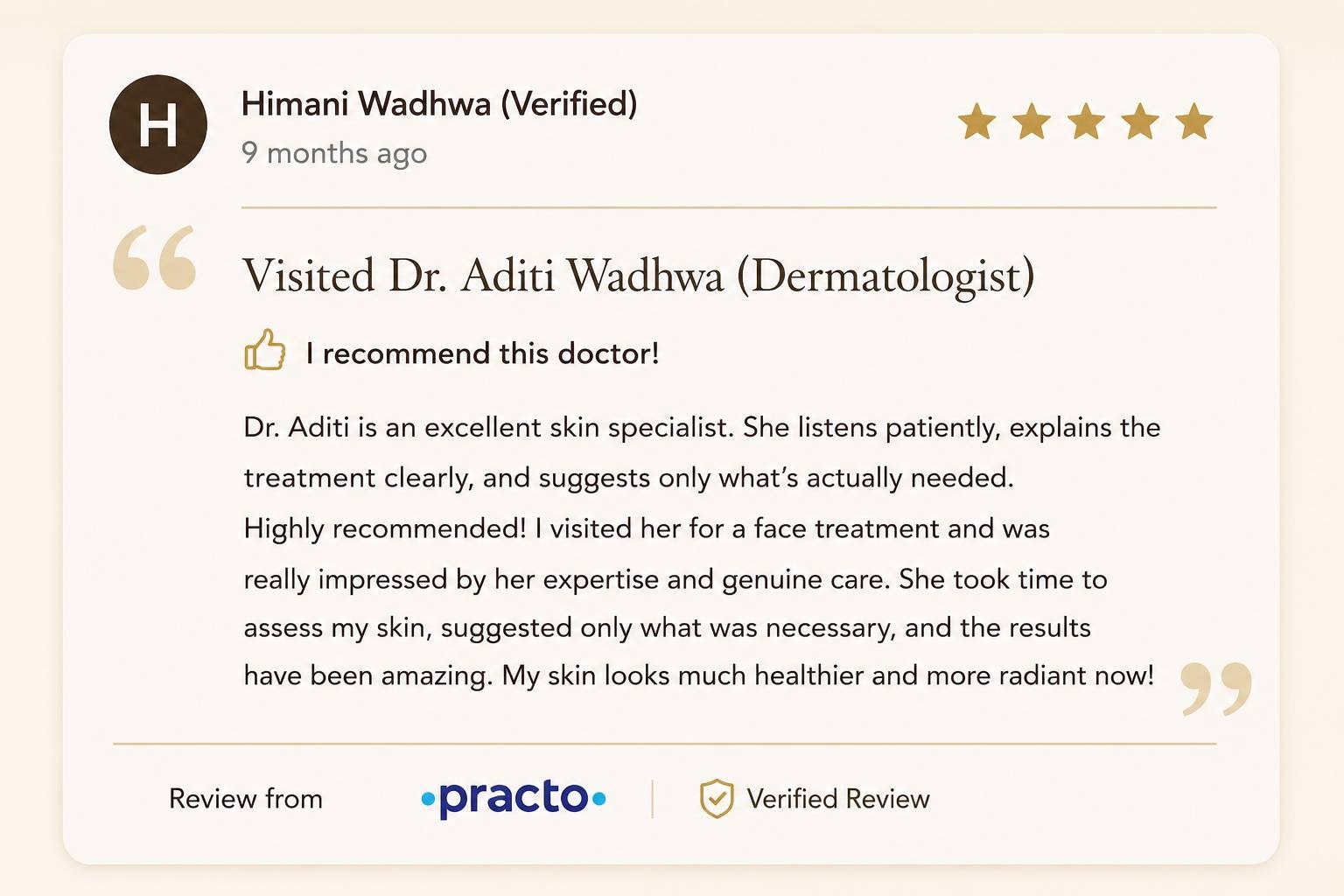
Dr. Aditi is an excellent skin specialist. She listens patiently, explains the treatment clearly, and suggests only what...

Read More
testimonial image
Reviews

Dr. Aditi Wadhwa was very generous and guided me and my friend really well about what would suit our skin type.

testimonial image
Reviews

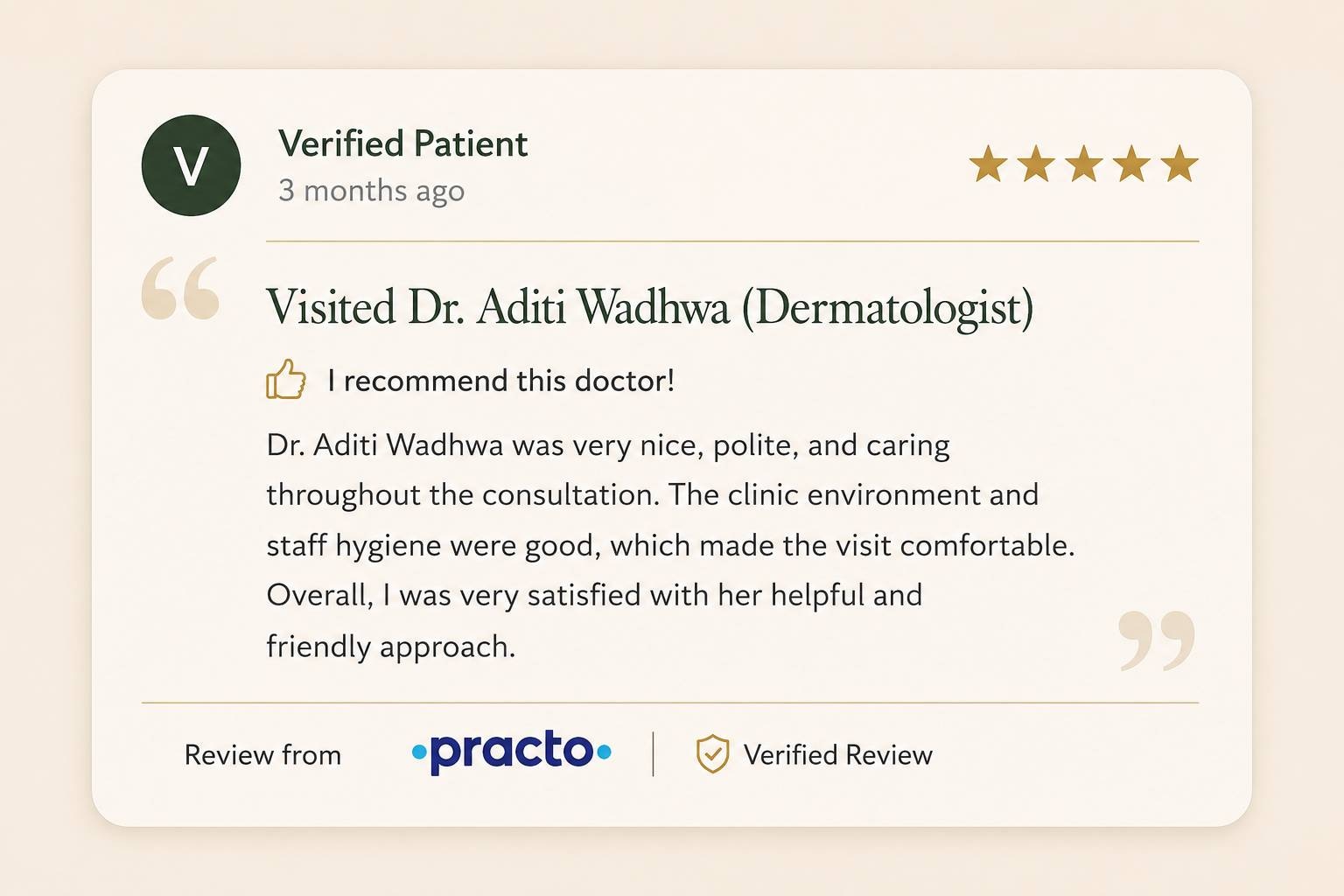
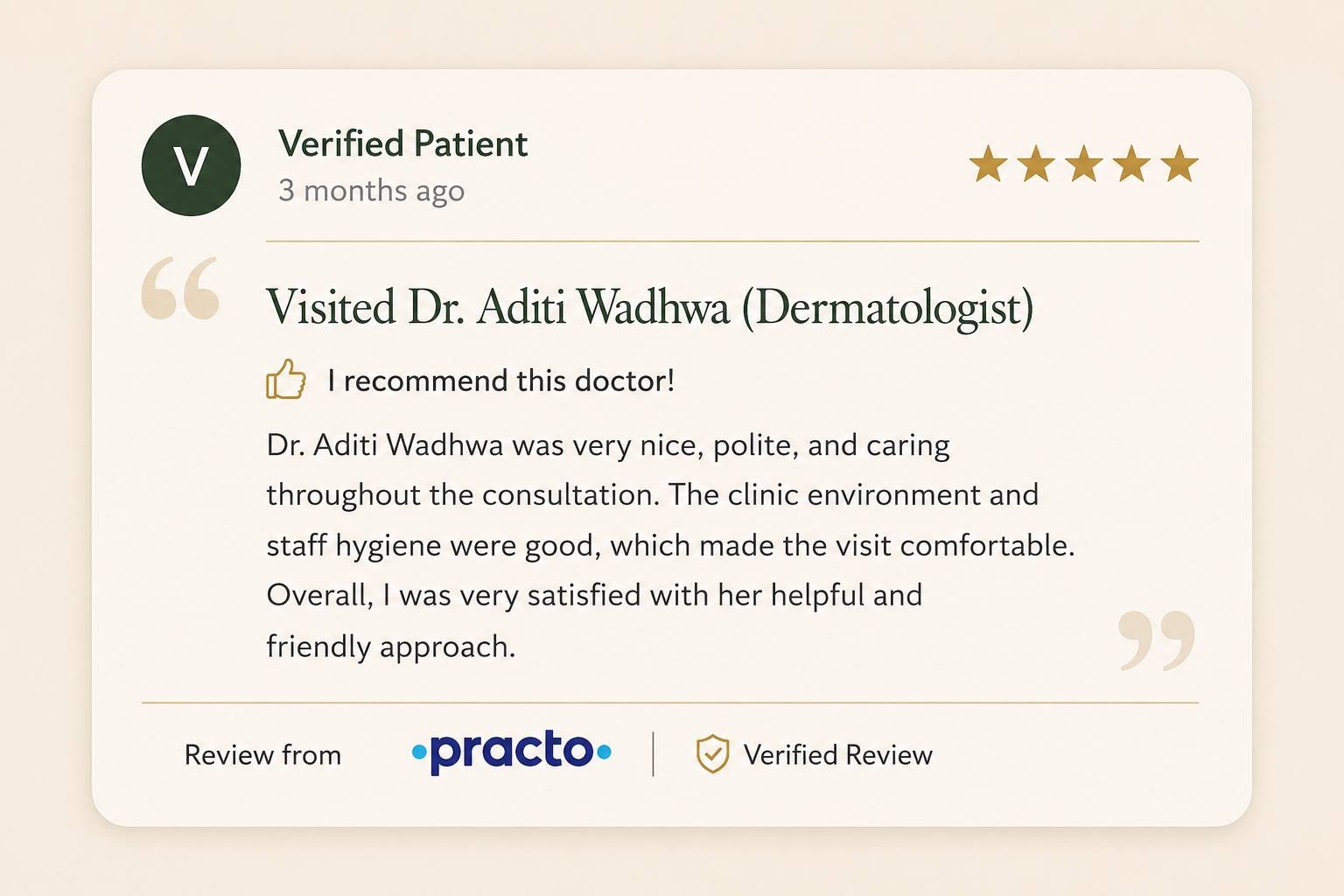
Dr. Aditi Wadhwa was very nice, polite, and caring throughout the consultation. The clinic environment and staff hygiene...

Read More

footerhc